Through the Lens of Stone: Zion’s Natural Architecture Unframed
Ever stood before a landscape so sculpted it feels designed by architects of old? That’s Zion National Park—where nature crafts cathedrals from sandstone. As a photographer, I was unprepared for how light dances across canyon walls at dawn or how narrow gorges frame perfect shots. This isn’t just scenery; it’s structure shaped by time, water, and wind. Discover how Zion’s natural architectural genius offers photographers more than beauty—it delivers meaning. In its soaring cliffs and winding passageways, one finds not only visual splendor but a profound sense of order, balance, and harmony. This is a place where geology meets artistry, and where every photograph becomes an interpretation of Earth’s silent design language.
The Photographic Power of Natural Architecture
Zion National Park stands as one of the most compelling examples of natural architecture in the American Southwest. Its towering cliffs, arched alcoves, and winding canyons do not merely impress—they invite contemplation. For photographers, Zion presents a rare convergence of form, light, and scale that mimics the intentionality of human design. The park’s formations resemble grand cathedrals, with vertical lines drawing the eye upward, colonnaded walls formed by erosion, and vaulted spaces carved by ancient rivers. These are not random shapes but deliberate-seeming structures shaped by millions of years of geological refinement.
What makes Zion particularly compelling for visual storytelling is the way its landscape engages the viewer like a built environment. The narrow slot canyons function as natural corridors, guiding movement and framing views. Overhangs and alcoves create shaded recesses that echo the function of porches or cloisters. Even the play of light follows architectural rhythms—sunrise illuminates west-facing walls like a daily ritual, while midday light casts sharp shadows that accentuate texture and depth. Photographers do not simply capture scenes here; they compose within a pre-existing design framework, working with nature’s blueprint rather than against it.
This sense of structured beauty enhances emotional resonance. When viewers see a photograph of Angels Landing or The Narrows, they respond not only to color and scale but to an innate human appreciation for symmetry, proportion, and enclosure. These are principles long understood in architecture, yet here they emerge entirely from natural forces. By recognizing and emphasizing these elements, photographers elevate their work from documentation to interpretation. They become translators of geological language, revealing how stone and time can express order, serenity, and awe.
The Geology That Builds Beauty: How Zion’s “Structures” Came to Be
Understanding Zion’s visual power begins with its geology. The park’s iconic red and orange cliffs are primarily composed of Navajo sandstone, a formation laid down over 150 million years ago during the Jurassic period. At that time, this region was a vast desert, similar to today’s Sahara, where wind-blown dunes accumulated in layers. Over time, these dunes were buried, compressed, and cemented into stone, preserving the sweeping crossbedding patterns visible in canyon walls today. These undulating lines are not decorative flourishes but fossilized records of ancient sand dunes, frozen in time.
The transformation from flat desert to dramatic canyon system began about 13 million years ago, when tectonic forces uplifted the Colorado Plateau. As the land rose, the Virgin River and its tributaries began cutting downward with increasing force, carving deep canyons into the sandstone. Unlike harder rock types that fracture abruptly, Navajo sandstone erodes in smooth, sculptural forms, allowing water and wind to shape curves, alcoves, and arches with remarkable precision. This differential erosion—where softer layers wear away faster than harder ones—creates the stepped profiles and overhangs that give Zion its architectural character.
One of the most striking aspects of Zion’s geology is the way it produces features that mirror human construction. Massive buttresses support cliff faces like flying buttresses on Gothic cathedrals. Natural arches span gorges like stone bridges. Alcoves and recesses form cave-like chambers that resemble chapels or niches. Even the process of exfoliation—where outer layers of rock peel away in sheets—creates smooth, dome-like surfaces reminiscent of vaulted ceilings. These are not coincidences but the result of consistent physical laws acting over immense timescales. The result is a landscape that feels both wild and ordered, chaotic and harmonious—a paradox that fascinates both scientists and artists.
Angels Landing: Ascent Into a Stone Cathedral
No trail in Zion captures the feeling of ascending through a living cathedral quite like Angels Landing. The 5.4-mile round-trip hike begins at the canyon floor, where towering walls rise on either side like the nave of a colossal church. As hikers climb the switchbacks of Walter’s Wiggles, the perspective shifts gradually—from enclosed intimacy to expanding grandeur. Each turn reveals new layers of sandstone, their colors deepening from pale beige to rich russet, their textures telling stories of wind and water. By the time the trail reaches Scout Lookout, the sense of verticality becomes overwhelming, with sheer drops on both sides and the canyon stretching endlessly below.
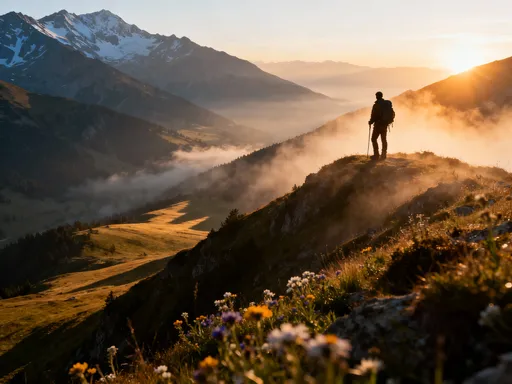
The final half-mile along the narrow ridge is not for the faint of heart, but it offers some of the most architecturally dramatic views in the park. The spine of the ridge functions like a natural colonnade, with rock fins rising on either side like pillars. The exposure creates a feeling of walking along a rooftop, high above the earth. At the summit, 360-degree views unfold—Zion Canyon to the east, the watchtowers to the south, and the distant plateaus fading into haze. For photographers, this vantage point provides unparalleled opportunities to capture the park’s structural complexity, with layered cliffs receding into the distance like terraced amphitheaters.
Timing is critical for capturing the full emotional impact of Angels Landing. Sunrise transforms the west-facing cliffs into glowing walls of amber and gold, with soft light accentuating texture and depth. A wide-angle lens helps emphasize the scale of the canyon, while a polarizing filter can enhance cloud definition and reduce glare on rock surfaces. Because the trail is narrow and often crowded, early morning hikes offer both better light and fewer obstructions. Photographers should also consider shooting from intermediate viewpoints along the trail, where the interplay of light and shadow on the canyon walls creates dynamic compositions without requiring the full ascent.
The Narrows: Framing Nature’s Hallways
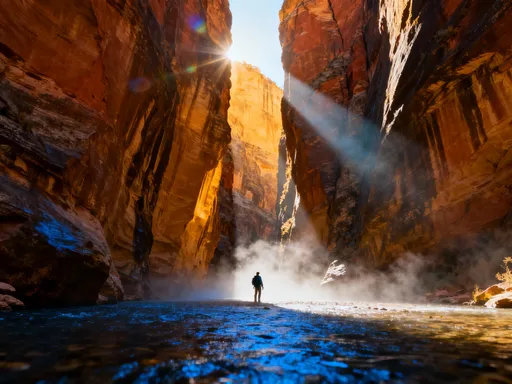
Walking through The Narrows is like entering a corridor designed by nature itself. Here, the Virgin River flows between walls that rise over 1,000 feet on either side, their smooth, curving surfaces shaped by millennia of water flow. Hikers wade through the river, often waist-deep, with each step revealing new angles and compositions. The experience is immersive—sound echoes off the stone, light filters down in narrow bands, and the sense of enclosure is profound. Unlike open vistas, The Narrows engages the senses in a more intimate way, drawing attention to detail, texture, and reflection.
For photographers, this environment presents both challenges and extraordinary opportunities. The confined space naturally creates strong leading lines, with the river guiding the eye deep into the frame. Shooting upward emphasizes the height and curvature of the walls, turning the canyon into a natural cathedral with a ceiling of sky. Reflections on the water’s surface double the visual impact, adding symmetry and depth. Because natural light comes primarily from above, midday can produce harsh contrasts, but overcast conditions or indirect sunlight create soft, even illumination ideal for capturing subtle color variations in the stone.
Practical considerations are essential for a successful shoot in The Narrows. Waterproof housing is a must for protecting camera equipment, and a neoprene dry bag provides additional security. Traction is another key concern—felt-soled wading boots or rubberized hiking shoes with good grip help prevent slips on slick river rocks. A tripod with spiked feet can provide stability in moving water, though photographers should be cautious about placing gear directly in the current. Because flash is ineffective in such expansive environments, reliance on natural light and high ISO settings (with noise reduction in post-processing) is often necessary. Despite these challenges, the rewards are unmatched—a chance to photograph one of the most architecturally unique spaces on Earth.
Hidden Gems: Off-the-Trail Vistas With Design-Like Precision
While Angels Landing and The Narrows draw the majority of visitors, Zion’s quieter corners offer equally compelling architectural details. Places like Weeping Rock, the Lower Emerald Pool, and Canyon Overlook reveal a more intimate side of the park’s design language. These sites are not defined by scale alone but by precision—dripping alcoves shaped by centuries of mineral-laden water, natural bridges formed by selective erosion, and overhangs with textures that resemble carved stonework. They invite close observation, rewarding those who take the time to look beyond the grand panoramas.
Weeping Rock, for example, is a small alcove where water seeps continuously from the sandstone ceiling, nourishing hanging gardens of maidenhair fern and monkey flower. The curved shape of the alcove creates a sheltered niche, its smooth walls polished by moisture. Photographers can use macro lenses to capture the delicate interplay of water, rock, and vegetation, or wide angles to show the alcove within its larger context. Early morning visits ensure soft light and fewer people, allowing for contemplative compositions.
Similarly, the Lower Emerald Pool area features a series of small waterfalls and reflective pools framed by sandstone walls. The contrast between still water and textured rock creates natural balance, while the green tint of the pool—caused by dissolved minerals—adds a unique color element. Because this area is relatively accessible, arriving at sunrise ensures solitude and optimal lighting. The Canyon Overlook Trail, though slightly more remote, offers one of the most perfectly framed views in the park, with a natural stone arch framing Zion Canyon like a living painting. These lesser-known spots remind us that architectural beauty in nature is not limited to monumental scale but can be found in quiet details.
Light as the True Architect: Capturing Zion Across the Day
If geology provides the structure, light is the force that brings it to life. In Zion, the position of the sun transforms the landscape hour by hour, revealing different facets of its architectural character. At sunrise, the east-facing cliffs of the Watchman and the Great White Throne glow with warm, golden hues, their layered bands illuminated like the pages of an open book. This is the ideal time to capture depth and texture, as low-angle light casts long shadows that accentuate ridges and grooves.
Midday light, while often harsh, has its own merits. When the sun is high, it reveals the true colors of the sandstone—deep reds, warm oranges, and pale yellows—unfiltered by shadow. This is particularly effective for aerial photography or shots taken from elevated viewpoints, where the full extent of the canyon system can be appreciated. Overcast days, often dismissed by photographers, can actually enhance the subtlety of Zion’s palette, muting contrasts and allowing for even tonal distribution across large rock faces.
Sunset is when Zion truly becomes theatrical. As the sun dips below the western rim, it bathes the eastern walls in a fiery glow, turning them into radiant backdrops. The West Temple, in particular, catches the last light like a beacon, its surface appearing to ignite from within. This is the moment when color reaches its peak intensity, and when long exposures can capture the gradual fade of light across the canyon. Modern tools such as sun path apps and weather forecasts help photographers plan their shoots with precision, ensuring they are in the right place at the exact moment of optimal illumination. By understanding and anticipating these changes, photographers align themselves with the rhythm of the land, becoming participants in its daily transformation.
Conservation Through the Viewfinder: Why These Structures Need Protecting
Every photograph taken in Zion carries with it a responsibility. The very features that make the park so photogenic—its delicate alcoves, fragile hanging gardens, and narrow trails—are also its most vulnerable. Increased visitation, while a testament to the park’s beauty, has led to visible impacts: trampled vegetation, eroded trails, and litter in remote areas. Climate change adds further pressure, with shifting precipitation patterns affecting water flow in The Narrows and altering plant communities at higher elevations.
Photographers, as both observers and influencers, play a crucial role in preservation. The images they share shape public perception of the park, inspiring others to visit and, ideally, to care. But this influence must be wielded ethically. Staying on designated trails prevents damage to cryptobiotic soil—a living crust that stabilizes desert surfaces and takes decades to recover once disturbed. Packing out all gear and waste ensures that natural spaces remain pristine. Avoiding off-trail exploration, no matter how tempting, protects sensitive ecosystems and maintains the integrity of the landscape.
Beyond personal behavior, photographers can advocate for stewardship by sharing stories that highlight conservation efforts. Capturing rangers at work, documenting restoration projects, or illustrating the effects of erosion can educate audiences in ways that statistics alone cannot. Social media, when used thoughtfully, becomes a platform for awareness rather than just aesthetics. By framing their work within a context of respect and responsibility, photographers help ensure that Zion’s natural architecture endures—not as a memory, but as a living, breathing masterpiece for future generations to experience and interpret.
Where Nature Designs and Light Preserves
Zion National Park is more than a destination; it is a masterclass in natural design. Its cliffs, canyons, and arches are not random formations but expressions of geological intelligence—structures shaped by time, water, and light with a precision that rivals human architecture. For photographers, the park offers not just beauty but meaning: a chance to engage with the Earth’s creative process, to interpret its silent language, and to participate in its preservation. Every image taken here is both a tribute and a responsibility.
The true power of Zion lies in its ability to connect us to something larger than ourselves. In its soaring walls and quiet alcoves, we find echoes of our own search for order, beauty, and sanctuary. By learning to see the park as a living architectural work, we deepen our appreciation and sharpen our commitment to protect it. Whether through the lens of a camera or the eyes of a hiker, the experience of Zion is transformative. It reminds us that nature does not merely exist—it designs, it shapes, it inspires. And in return, it asks only that we look closely, tread lightly, and preserve its quiet genius for all who come after.