You Won’t Believe These Hidden Festival Gems in the Lake District
You know that feeling when you stumble on a secret no one else seems to know? That’s exactly what happened when I discovered the Lake District’s underground festival scene. Far from crowded tourist trails, locals gather for intimate celebrations of music, food, and tradition you won’t find in any guidebook. Think roaring bonfires, folk tunes under starlight, and village feasts that feel like home. This is the real heart of Cumbria—raw, authentic, and absolutely unforgettable. Let me take you there.
The Hidden Pulse of the Lake District
Beyond the postcard views of shimmering lakes and misty fells lies a quieter, deeper rhythm—the seasonal festivals that have long anchored community life in Cumbria. While most visitors plan their itineraries around Windermere boat rides or summiting England’s highest peak, Scafell Pike, a different kind of experience unfolds in village halls, churchyards, and farm fields. These gatherings are not curated for Instagram or timed for tour buses. They are lived moments, passed down through generations, sustained by pride, tradition, and a deep sense of belonging.
These hidden festivals matter because they preserve a cultural identity that might otherwise fade in the face of mass tourism and modernization. They are celebrations of resilience, of rural craftsmanship, and of seasonal cycles that still shape life in the Lake District. For travelers, they offer something increasingly rare: authenticity. Unlike scripted performances or commercialized events, these festivals invite genuine participation. You’re not just observing culture—you’re stepping into it, even if only for a day.
What makes these events so powerful is their ability to transform travel from a checklist into a connection. Instead of ticking off landmarks, you find yourself sharing stories with a local baker, clapping along to a fiddle tune, or warming your hands at a communal fire. These moments create meaning. They remind us that travel is not just about where we go, but how we engage with the places and people we meet. The Lake District’s festival culture offers a blueprint for deeper, more respectful exploration—one rooted in presence rather than possession.
Spring Wakes: Villages Coming Alive
As winter’s chill retreats and daffodils bloom along stone walls, the Lake District stirs to life with a series of spring wakes and parish festivals. These events, often held in April and May, mark the renewal of both land and community. In villages like Hawkshead, Troutbeck, and Longsleddale, the air fills with the chime of church bells, the rhythmic stomping of Morris dancers, and the scent of freshly baked scones. These are not tourist attractions but living traditions, where generations gather to honor the turning of the seasons.
One of the most enduring customs is well-dressing, where villagers decorate natural springs and wells with intricate designs made from flower petals, moss, and seeds. Each design tells a story—of gratitude, of hope, or of local history. In Troutbeck, the well-dressing ceremony is accompanied by a procession, hymns sung in the ancient parish church, and a shared lunch of local cheeses, oatcakes, and Cumberland sausage. The atmosphere is one of quiet joy, where even strangers are welcomed with a smile and a cup of herbal tea.
What makes spring festivals so special is their intimacy. Attendance is modest, often just a few hundred people, mostly locals and a handful of in-the-know visitors. There are no loudspeakers or ticketed entry—just the natural acoustics of a village green and the warmth of community spirit. Children dance in handmade costumes, elders share tales of past wakes, and musicians play folk tunes on fiddles and concertinas. It’s a world away from the bustle of summer tourism, offering a rare chance to experience Cumbrian life as it’s truly lived.
For those hoping to attend, timing is key. Most events are announced through local noticeboards, church bulletins, or regional tourism websites. The best way to stay informed is to visit a local tourist information center in Ambleside or Kendal a few days before your trip. Once you’ve found an event, pair it with a gentle walk—perhaps along the Loughrigg Terrace for panoramic views of Windermere, or through the woods of Tarn Hows. Afterward, warm up at a traditional inn like the Sun Inn in Hawkshead, where a hearty steak and ale pie awaits by the fire.
The Secret Sounds of Summer: Intimate Music Gatherings
While the UK’s summer festival season is dominated by large-scale events, the Lake District offers a quieter, more soulful alternative. Nestled in quiet valleys and working farms, small music gatherings bring together local musicians, artisans, and music lovers for weekends of acoustic sets, storytelling, and shared meals. These are not festivals with headliners or light shows, but gatherings where the music feels personal, the connections real, and the setting breathtaking.
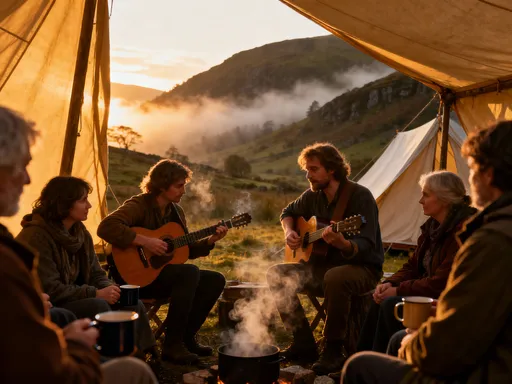
One such event is the Borrowdale Craft & Music Weekend, held each July in the shadow of Great Gable. Spread across a working farm, the festival features folk bands from across Northern England, craft workshops in traditional wool spinning and basket weaving, and evening campfire sessions where guests are invited to sing along. The sound of a fiddle echoing through the valley at dusk, the smell of woodsmoke in the air—these are moments that linger long after the final note.
Another gem is the Lowther Show, a country fair with deep roots in Cumbrian agricultural life. While it includes livestock competitions and vintage tractor displays, it also hosts an acoustic stage where bluegrass and folk artists perform throughout the day. Families spread blankets on the grass, children chase sheepdogs, and visitors sip local cider under patchwork tents. The atmosphere is joyful but unpretentious—more about community pride than commercial appeal.
These intimate music events matter because they support local talent and preserve regional musical traditions. Unlike mainstream festivals, they are not driven by profit or branding. They exist because people love the music and the land it comes from. For travelers, attending one of these gatherings is a chance to listen closely, to slow down, and to connect with the cultural heartbeat of the region.
To attend respectfully, come prepared. Parking is often limited, so arrive early or consider cycling from nearby villages. Bring a reusable water bottle, a picnic, and a blanket. Avoid loud conversations during performances and never use flash photography—many of these events are recorded informally by local volunteers, and intrusive behavior can disrupt the mood. Most importantly, engage with kindness. Ask a vendor about their craft, compliment a musician after their set, and say thank you to the organizers. These small gestures help preserve the spirit of these gatherings.
Harvest Celebrations: Taste the Tradition
As autumn paints the fells in gold and russet, the Lake District turns its attention to the harvest—a time of abundance, gratitude, and celebration. In villages like Grasmere, Bampton, and Wasdale, harvest festivals bring communities together to honor the season’s bounty. These are not just agricultural fairs but sensory experiences, where the taste of a freshly baked gingerbread, the aroma of pressed apple juice, and the sight of prize-winning pumpkins create lasting memories.
The Grasmere Agricultural Show, held each September, is one of the most cherished events in the Cumbrian calendar. Farmers showcase their best livestock—prize-winning Herdwicks, glossy-coated Shetlands, and proud poultry. Meanwhile, the baking tent buzzes with activity as locals enter their homemade jams, scones, and, of course, gingerbread. The famous Grasmere Gingerbread Stall, a fixture at the fair for over 150 years, draws lines of visitors eager to taste the spiced, crumbly treat that has become a regional icon.
What sets these harvest festivals apart is their emphasis on participation. You’re not just watching—you’re tasting, touching, and learning. Children press apples in hand-cranked crushers, families sample local ales at tasting booths, and visitors can try their hand at traditional crafts like butter churning or wool dyeing. These hands-on experiences create a deeper understanding of rural life and the skills that sustain it.
For travelers, harvest festivals offer a meaningful way to support local producers. Buying a jar of blackberry jam from a village elder, or a hand-knit scarf from a young artisan, means more than a souvenir from a shop. It’s a direct exchange, a small act of reciprocity that strengthens the local economy. And the flavors—rich, earthy, unprocessed—are a reminder of how food connects us to place and season.
To make the most of these events, arrive early to avoid crowds and bring cash—many small vendors don’t accept cards. Wander the market stalls slowly, ask questions, and sample with curiosity. Pair your visit with a scenic walk, perhaps the gentle path around Easedale Tarn or the historic Coffin Route from Rosthwaite. If you’re staying overnight, consider a farm stay or a family-run B&B, where breakfast might include eggs from the host’s own hens and honey from their garden hive.
Winter Light and Warmth: Cozy Community Gatherings
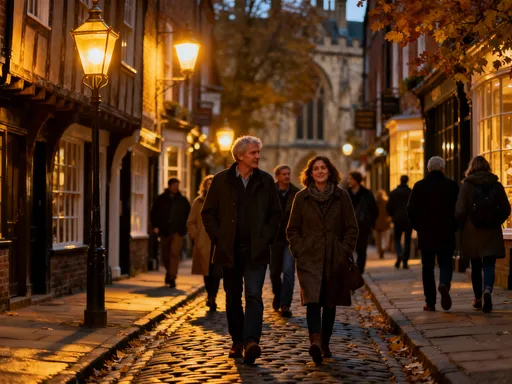
When winter descends on the Lake District, the landscape grows quiet, but the spirit of community only deepens. In December, villages come alive with small, heartfelt celebrations that offer warmth in every sense. From the lighting of the Christmas tree in Keswick’s market square to candlelit carol services in 12th-century churches, these events are not about spectacle but about togetherness.
In Penrith, the annual Christmas lights switch-on is a cherished tradition. Local schoolchildren sing carols, the mayor flips the switch with a flourish, and the crowd sips mulled wine from paper cups. There’s no grand stage or celebrity guest—just neighbors, families, and visitors standing side by side, faces glowing in the soft light. Nearby, a row of wooden stalls sells handmade ornaments, spiced nuts, and hot chocolate topped with whipped cream.
Similar scenes unfold in Grasmere and Bowness-on-Windermere, where churches host Advent services filled with harmonies that echo off ancient stone walls. In Ambleside, the community organizes a lantern walk, where children carry handmade paper lanterns through the town, their light bobbing like fireflies in the dark. These moments are simple, but they carry emotional weight—a reminder of shared humanity, of light in the longest nights.
Winter festivals offer a unique kind of travel experience. With fewer tourists, the region feels more accessible, more authentic. You’re not jostling for space or waiting in long lines. Instead, you’re invited into the rhythm of local life. A shopkeeper might offer you a mince pie, a choir member might hand you a song sheet, and a stranger might point you toward a hidden footpath dusted with frost.
To enjoy these events, dress warmly in layers—wool socks, a thermal base, and a waterproof outer shell. Arrive early to secure a good spot, especially for carol services, which can fill quickly. Afterward, warm up at a cozy pub like the Jumble Room in Keswick or the Drunken Duck in Ambleside, where open fires and locally brewed ales create the perfect end to a winter evening. And don’t rush—let the pace of the season guide you. A twilight walk along the shores of Derwentwater, the moon reflecting on the still water, can be just as memorable as any festival.
How to Find and Respect These Hidden Events
One of the joys of seeking out the Lake District’s hidden festivals is the thrill of discovery—but it also comes with responsibility. These events thrive because they remain small, community-led, and free from commercial intrusion. To preserve their authenticity, visitors must approach them with care and respect.
The best way to learn about unadvertised events is through local channels. Stop by a tourist information center in towns like Keswick, Ambleside, or Ulverston. Speak with staff—they often have flyers or handwritten notices about upcoming gatherings. Community Facebook groups, such as “Cumbria Events & Gatherings” or “Lake District Local Life,” are also valuable resources. Even a casual conversation at a village shop or post office might yield a tip about a Morris dancing display or a harvest supper.
When attending, remember that you are a guest. Avoid bringing large groups—many events have limited space. Refrain from using flash photography or loud recording devices, which can disrupt the atmosphere. If you plan to share photos online, ask permission first, especially if people are featured. And always support the vendors—buy a loaf of bread, a jar of honey, or a hand-carved spoon. Your purchase is more than a souvenir; it’s a contribution to the community.
Most importantly, practice mindful travel. Listen more than you speak. Let locals guide the experience. Arrive with curiosity, not expectation. These festivals are not performances for outsiders—they are expressions of identity, of continuity, of home. By honoring that, you become part of something meaningful, not just a spectator.
Why These Moments Stay With You
Years from now, you may not remember every mountain you climbed or every lake you crossed in the Lake District. But you will remember the Morris dancer’s wink as he spun past you, the taste of warm gingerbread on a crisp autumn day, the sound of carols rising into the winter night. These are the moments that stay with us—not because they were grand, but because they were real.
Secret festivals have a way of touching something deep within us. They remind us that travel is not just about seeing new places, but about feeling connected—to people, to traditions, to the rhythm of life in a particular corner of the world. In an age of fast travel and curated experiences, these gatherings offer a rare gift: slowness, sincerity, and shared humanity.
They teach us that the most meaningful journeys are not those that cover the most ground, but those that open our hearts. Singing along to a folk song you’ve never heard, sharing a bench with a local elder, tasting a recipe passed down for generations—these are the encounters that transform us. They dissolve the line between visitor and community, between observer and participant.
And the truth is, these kinds of celebrations exist not just in the Lake District, but in every region, every culture. They may look different—a village dance in Portugal, a harvest blessing in Japan, a winter solstice gathering in Scandinavia—but the essence is the same: people coming together to mark the seasons, to honor their roots, to share what matters most.
So as you plan your travels, look beyond the guidebooks. Seek out the quiet events, the local traditions, the gatherings that don’t make the headlines. Slow down. Listen closely. Let communities guide your journey. Because the true magic of travel isn’t in seeing more—it’s in feeling more. And in the hushed moments between songs, in the warmth of a shared fire, in the smile of a stranger who welcomes you like family—that’s where the real journey begins.