You’ve Never Seen Chiang Mai Like This — Slow Travel’s Best-Kept Viewpoints
Chiang Mai isn’t just temples and tuk-tuks — it’s misty mountains, silent dawn views, and moments that make you pause. I spent weeks moving slowly through northern Thailand, chasing not checklists, but connection. What I found were viewpoints that don’t scream for attention — they whisper. From hidden hillside nooks to temple rooftops at sunrise, these spots reshaped how I see travel. This is slow travel at its finest: intentional, immersive, unforgettable.
Why Slow Travel Changes Everything in Chiang Mai
Chiang Mai offers a rare gift in today’s fast-paced world — the permission to move slowly. Unlike cities built for efficiency or tourist hubs designed around packed itineraries, this northern Thai gem thrives on rhythm, not rush. Life here unfolds in the curl of incense smoke, the rhythm of monks’ morning chants, and the unhurried pace of farmers tending terraced fields. For travelers, this cultural cadence becomes an invitation: to step off the conveyor belt of sightseeing and into a deeper, more meaningful way of experiencing place.
When you slow down, your senses sharpen. The scent of frangipani on a warm breeze becomes distinct. The distant chime of temple bells carries emotional weight. You begin to notice how light filters through teak leaves in the late afternoon, or how villagers greet each other with quiet nods rather than hurried hellos. These details aren’t just background noise — they’re the essence of Chiang Mai’s soul. Fast travel collects postcard moments; slow travel collects feelings, textures, and memories that linger long after the flight home.
Contrast this with the typical tourist approach: a whirlwind of must-see temples, night markets, and cooking classes crammed into three days. While these experiences have value, they often prioritize quantity over quality. Visitors leave with photos, but not always with understanding. Slow travel flips that script. It’s not about how many places you visit, but how deeply you inhabit the ones you do. It’s choosing to spend a full morning at Wat Phra Singh, observing rituals rather than rushing through courtyards, or lingering in a hill tribe village long enough to learn how to weave bamboo from a local elder.
One of the most transformative experiences I had was spending three full days in a small mountain village near Doi Pui. There were no hotels, no guided tours, just a homestay with a Lanna family who welcomed me with herbal tea and patient conversation. Each day began with a walk through rice paddies, followed by shared meals and stories under a shaded veranda. By the third day, something shifted — I stopped feeling like a guest and started feeling like part of the rhythm. That’s the power of slowness: it dissolves the boundary between observer and participant. It turns travel from performance into presence.
The Magic of Morning: Sunrise Spots That Define Stillness
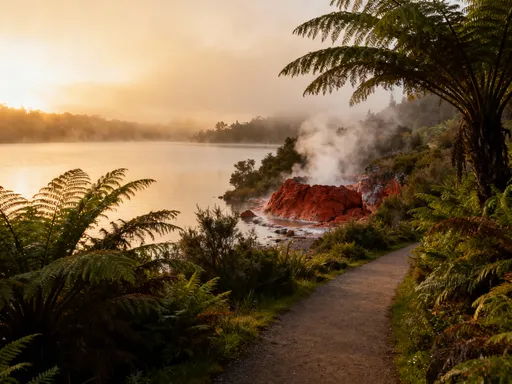
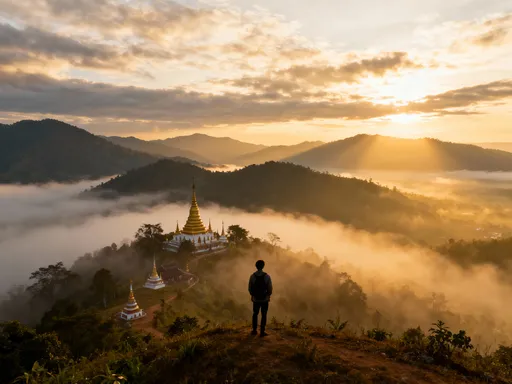
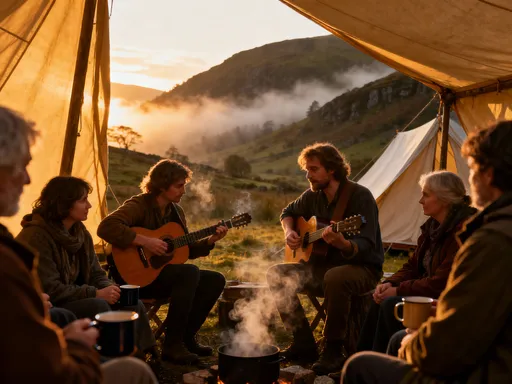
Dawn in Chiang Mai is not just a time of day — it’s a state of mind. As the night mist clings to the valleys and the first light bleeds gold over the Doi Suthep range, the city stirs softly. This is when the most profound viewpoints reveal themselves, not in grand spectacle, but in quiet revelation. The upper terraces of Doi Suthep, often crowded by mid-morning, become sanctuaries of stillness before the day begins. Standing there in the half-light, wrapped in a light shawl against the mountain chill, I felt a rare kind of peace — one that comes not from escape, but from alignment with the natural world.
The early light does something remarkable to the landscape. It softens edges, turns shadows into silhouettes, and paints the sky in gradients of lavender and rose. From high vantage points, the city below appears as a sleeping giant, temples glowing faintly like embers. The air is cool and crisp, carrying the faint scent of damp earth and distant woodsmoke. In these moments, the usual noise of travel — the bargaining, the navigating, the photographing — falls away. What remains is pure observation, a chance to simply be present with what is.
Reaching these viewpoints requires effort, but the reward is solitude. To experience sunrise at Doi Suthep, it’s best to leave Chiang Mai city by 5:00 a.m. A private car or motorbike taxi is more reliable than public transport at that hour. Some travelers opt to hike up the mountain via the Monk’s Trail, a winding path that takes about two hours and offers its own series of mini-views along the way. Either way, arriving early means you’ll have the upper terraces to yourself for at least thirty minutes before the first tour buses arrive. That window of quiet is priceless.
I remember sitting on a stone bench near the temple’s outer shrine, sipping thermos coffee, as a monk in saffron robes walked silently along the balustrade, pausing to gaze at the valley below. We didn’t speak, but there was a mutual understanding — this was not a place to rush through. It was a place to absorb. By the time the crowds came, I was already descending, carrying the morning’s stillness with me like a secret. That’s the lesson of dawn: the most beautiful moments are often the ones no one is trying to capture.
Hidden Hills and Quiet Corners: Off-the-Beaten-Path Lookouts
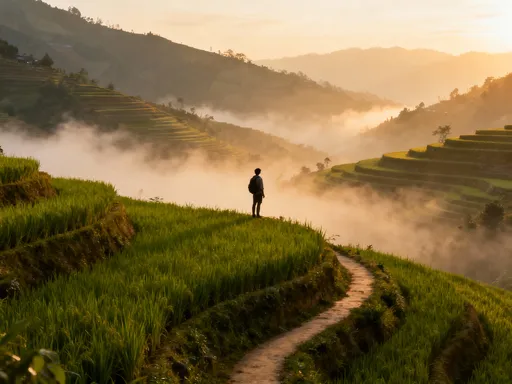
Beyond the well-trodden trails of Doi Suthep and Doi Inthanon lies a network of lesser-known vantage points that reward the patient traveler. These are not marked on most tourist maps, nor do they come with souvenir stalls or ticket booths. Instead, they offer unfiltered views of northern Thailand’s rugged beauty — rolling hills cloaked in emerald, terraced farms carved into steep slopes, and distant peaks vanishing into morning fog. Places like the ridgeline near Huay Kaew Waterfall or the quiet trails behind Doi Pui Village reveal what speed hides: the sound of a kingfisher diving into a stream, the shift in air temperature as clouds pass overhead, the faint ring of temple bells carried on the wind.
One such spot is a small clearing along a community-maintained trail just west of the Bhubing Palace grounds. Accessible via a dirt path marked only by a wooden sign in Thai, it offers a panoramic view of the entire Chiang Mai basin. On clear mornings, you can see the city’s skyline framed by mountains, with wisps of mist clinging to the lower slopes. What makes this place special isn’t just the view, but the sense of discovery. There are no railings, no benches, no signs warning you to stay on the path. It feels untouched, intimate, as if you’ve stumbled upon a local secret.
These hidden lookouts are often part of community-based tourism initiatives, where villages open their land to respectful visitors in exchange for small donations or guided walks. Such programs not only preserve natural spaces but also support local livelihoods. Walking these trails, I was often joined by villagers tending crops or collecting herbs, who greeted me with warm smiles and simple phrases like “Sawasdee ka.” These encounters weren’t staged for tourists — they were real, fleeting moments of human connection that deepened the experience.
When visiting these areas, it’s essential to travel with care. Stick to marked paths, avoid loud noises, and never remove plants or disturb wildlife. Carry out all trash, and if you bring food, choose items with minimal packaging. The goal is not to leave footprints, but to pass through with gratitude. By doing so, you help ensure these quiet corners remain pristine for future travelers — and for the communities who call them home.
Temple Rooftops and Ancient Walls: Urban Vistas with Soul
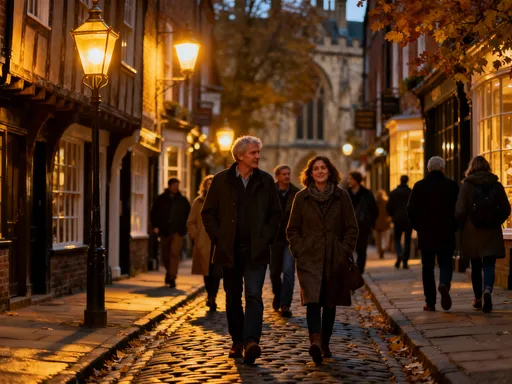
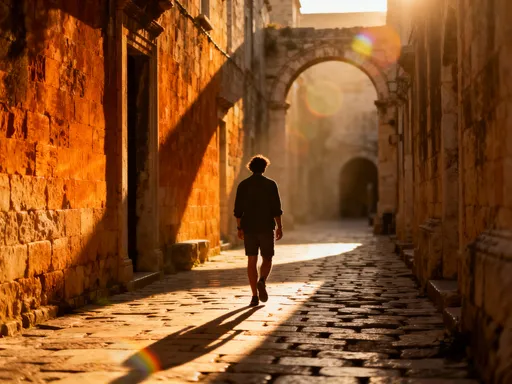
Even within Chiang Mai’s historic old city, elevated perspectives await those who know where to look. While most visitors admire temples from ground level, few consider the view from above. Yet several temple compounds feature rooftop terraces or upper balconies that offer breathtaking panoramas — of temple spires, treetop canopies, and the distant mountain range. Wat Chedi Luang, once home to the Emerald Buddha, has a partially ruined chedi that allows access to its upper levels. From there, you can see the entire square, with prayer flags fluttering in the breeze and locals lighting incense at ground-level shrines.
Wat Phra Singh, one of the city’s most revered temples, also offers quiet vantage points. A narrow staircase leads to a second-floor gallery surrounding the main assembly hall. From this elevated perch, you can observe the flow of visitors below while enjoying a sweeping view of the temple grounds. Early in the morning, when the sun strikes the golden stupa at just the right angle, the entire complex glows with a warm, almost sacred light. It’s a moment of visual harmony — architecture meeting nature, spirituality meeting serenity.
The best times to visit these urban viewpoints are early morning or late afternoon, when the light is soft and the crowds are thin. Midday brings heat and humidity, along with waves of tour groups. But arrive at 7:00 a.m., and you might have the rooftop to yourself. The air is still cool, the city just waking. You can hear the soft clink of monks’ alms bowls, the rustle of palm fronds, and the distant hum of motorbikes starting their day. These sounds, paired with the view, create a meditative atmosphere that few cityscapes offer.
What makes these urban vistas unique is how they frame the relationship between the built and the natural. Temple spires rise like fingers pointing toward the sky, while mountains loom in the background like ancient guardians. It’s a reminder that Chiang Mai was never meant to dominate nature — it was built in dialogue with it. Even in the heart of the city, nature asserts itself: vines climb temple walls, birds nest in roof beams, and trees grow through cracks in old stone. These rooftop views don’t just show you the city — they show you how the city belongs.
Café Culture with a View: Where to Pause and Absorb
Chiang Mai’s hillside cafés have gained international fame, but beyond the Instagrammable backdrops lies a quieter, more authentic culture of pause. The best of these spaces aren’t designed for photo ops — they’re designed for presence. Tucked into the slopes of Doi Saket or nestled in the folds of Suthep Mountain, they offer more than coffee; they offer stillness. Wooden platforms extend over the edge of cliffs, bamboo seating blends into the foliage, and the only sound is the rustle of leaves and the occasional call of a jungle bird. Here, time slows. A single cup of locally grown arabica can last an hour, not because it’s strong, but because there’s no rush to finish it.
One such café, located along a winding road near the base of Doi Pui, is run by a family of small-scale coffee farmers. They roast their beans on-site, using a traditional clay oven, and serve them with honey harvested from their own hives. The view from their terrace stretches across a valley of rice fields and forest, with mist rising in the early hours like breath from the earth. There are no menus laminated in plastic, no Wi-Fi passwords scrawled on chalkboards — just a handwritten list of drinks and a quiet invitation to sit, sip, and look.
These low-impact cafés play an important role in sustainable tourism. By sourcing ingredients locally and minimizing waste, they support rural economies without exploiting them. Some even offer small workshops — how to grind beans by hand, how to identify native plants, how to brew tea the Lanna way. These experiences aren’t packaged for tourists; they’re shared, like stories over a kitchen table.
The real value of these spaces isn’t in the coffee, but in the permission they give you to do nothing. In a world that equates productivity with worth, sitting still with a view can feel radical. Yet it’s in these moments — the breeze on your face, the warmth of a clay cup, the silence between thoughts — that travel becomes transformative. You’re not just seeing Chiang Mai; you’re feeling it, absorbing it, becoming part of its rhythm.
Nature Trails That Lead to Revelation: Hiking with Purpose
Chiang Mai’s network of nature trails offers more than exercise — it offers insight. The best hikes here aren’t about summiting peaks or conquering distances; they’re about paying attention. A short trek through the Huay Kaew Conservation Area, for example, reveals layers of life: orchids clinging to tree trunks, geckos darting across sun-warmed rocks, the sudden burst of birdsong as a hornbill takes flight. The trail itself is simple — well-marked, gently graded — but what it teaches is profound: that beauty exists in the details, and that movement can be meditative.
One particularly memorable path leads to a natural overlook known locally as “Mae Sa Viewpoint.” The hike takes about 45 minutes through mixed deciduous forest, with elevation rising just enough to make you feel the effort without strain. Along the way, the air changes — cooler at higher altitudes, scented with pine and damp moss. Benches at intervals invite rest, not because the climb is hard, but because the view demands it. When you reach the top, the valley unfolds below in a tapestry of green, with the Mae Sa River winding like a silver thread through the landscape.
What makes this kind of hiking meaningful is the practice of mindfulness. It’s easy to treat trails as challenges to be completed, but slow travel encourages a different approach: to walk not to arrive, but to notice. The crunch of gravel underfoot, the shift in light as clouds pass, the way your breath syncs with your steps — these are the rhythms of the trail. When you tune into them, the hike becomes less about the destination and more about the journey itself.
For independent walkers, preparation is key. Wear sturdy shoes, carry water, and bring a light rain jacket — afternoon showers are common in the mountain areas. Stick to marked trails, and avoid wandering off-path, especially during the rainy season when landslides can occur. Most importantly, go at your own pace. There’s no prize for finishing first. The real reward is the clarity that comes from moving through nature with intention, from feeling the earth beneath your feet and the wind on your face. In those moments, you’re not just visiting Chiang Mai — you’re living within it.
Bringing It Home: How These Views Change the Way You Travel
The viewpoints I discovered in Chiang Mai didn’t just change what I saw — they changed how I see. Before, travel was about collecting experiences, ticking off destinations, returning with a full camera roll. Now, I understand that the most lasting moments are often the quietest: a sunrise witnessed in silence, a hillside café where no one speaks your language but everyone smiles, a trail where the only sound is your own breath. These are not highlights to be shared online; they are internal shifts, subtle but permanent.
Slow travel taught me the value of patience, presence, and deep observation. It showed me that beauty doesn’t always announce itself — sometimes it waits in the corners, in the early hours, in the unphotographed moments. It reminded me that connection — to place, to people, to self — is the true purpose of journeying. And perhaps most importantly, it showed me that these lessons don’t end when the trip does.
You can bring slow observation home. You can practice it in your own neighborhood — noticing how light falls on a brick wall in the late afternoon, listening to the rhythm of birds in the park, savoring a cup of tea without distraction. Travel, at its best, doesn’t just show you the world — it teaches you how to see it more deeply, wherever you are.
So the next time you plan a trip, consider not how far you can go, but how deeply you can stay. Seek the quiet viewpoints, the early mornings, the unhurried conversations. Let Chiang Mai’s whispering hills remind you that the best views aren’t just seen — they’re felt, remembered, and carried forward. Because in the end, it’s not the places that change us — it’s the way we move through them.