You Haven’t Lived Until You’ve Seen These Hidden Corners of Toulouse
Tucked away from the postcard-perfect streets of central Toulouse lies a quieter, more soulful side of the city—one where locals unwind in secret gardens, sip wine in courtyard hideaways, and linger over books in tucked-away cafés. I wandered far beyond the crowded alleys of Capitole and discovered leisure spots that breathe authenticity. These are not listed in guidebooks, but they define the true rhythm of life here. If you’re chasing real moments over photo ops, this is where Toulouse reveals its heart. Travel becomes meaningful not through checklist tourism, but through stillness, observation, and the courage to wander without a map.
The Other Side of Toulouse
Toulouse is often celebrated for its blush-hued terracotta buildings, its grand Capitole Square, and its reputation as the heart of France’s aerospace industry. Yet, beyond these well-documented highlights lies a different city—one that hums with the quiet energy of daily life. This Toulouse does not perform for cameras. It wakes slowly with a warm baguette in hand, strolls without destination, and pauses to watch the light shift across the Garonne River. The contrast between the tourist-facing city and its intimate, local counterpart is not a divide, but a layered experience waiting to be explored.
For many visitors, a trip to Toulouse begins and ends in the city center, where postcard views and historic landmarks dominate the itinerary. But meaningful travel often begins where guidebooks end. The true character of a place reveals itself not in monuments, but in the spaces where people live, rest, and reconnect. These hidden corners offer more than scenery—they offer perspective. They remind us that leisure is not a luxury, but a rhythm. And in Toulouse, that rhythm is gentle, deliberate, and deeply human.
Exploring off-the-beaten-path locations is not about rejecting popular sites, but about expanding one’s understanding of a destination. When we step away from the crowds, we allow ourselves to move at the pace of the city’s heartbeat. We notice small details: the way sunlight filters through plane trees, the sound of a violin drifting from an open window, the scent of lavender from a hidden garden. These moments, unscripted and unhurried, form the soul of travel. In Toulouse, they are not rare—they are waiting just around the corner.
Les Allées François-Mitterrand: Where Locals Breathe
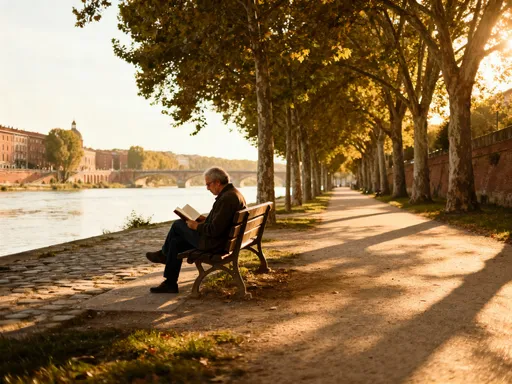
Running parallel to the Garonne River, Les Allées François-Mitterrand offers a peaceful counterpoint to the bustle of central Toulouse. This tree-lined promenade, often overlooked by tourists, is a favorite among residents seeking quiet contemplation or a midday escape from the urban rush. Shaded pathways weave between tall plane trees, their canopies forming a natural arch that softens the sunlight. Benches are strategically placed along the riverbank, inviting passersby to sit, read, or simply watch the water flow beneath the stone bridges.
Mornings here are especially serene. Joggers move in steady rhythm, their footsteps muffled by the gravel path. Cyclists glide by, baskets filled with fresh bread from nearby markets. By mid-afternoon, families arrive with picnic blankets, spreading them on the grassy patches beneath the trees. The atmosphere is one of gentle activity—movement without urgency, presence without performance. It is a space designed not for spectacle, but for restoration.
Accessibility is straightforward. The allées stretch from the Pont Neuf in the west to the Pont des Catalans in the east, connecting several residential neighborhoods. Public transport options include nearby metro stops at Jeanne d’Arc and Compans-Caffarelli, making it easy to reach without a car. For those who prefer to walk, a gentle stroll from the Jardin des Plantes takes about 15 minutes, offering a scenic approach along the river.
Visitors are encouraged to come early in the day or just before sunset, when the golden light casts long shadows and the air cools. A small kiosk near the central section serves coffee and pastries, though many locals bring their own drinks and snacks. There are no grand attractions here—no fountains, no statues, no ticketed entries. And that is precisely the point. Les Allées François-Mitterrand is not a destination to check off a list; it is a place to inhabit, even if only for an hour.
Le Jardin des Plantes: A Secret Garden with Soul
Nestled in the Saint-Étienne district, Le Jardin des Plantes is one of Toulouse’s best-kept secrets. Though it shares a name with the famous botanical garden in Paris, this garden is smaller, quieter, and far more intimate. Originally established in the 18th century as a scientific garden for medical students, it has evolved into a cherished neighborhood sanctuary. Today, it serves as a green haven where families gather, students study under ancient trees, and elderly couples walk hand in hand along winding paths.
The garden’s layout is both structured and natural. Formal rose beds burst with color in late spring and summer, their fragrance mingling with the scent of damp earth and cut grass. Ponds dotted with lily pads are home to ducks and the occasional turtle, drawing children who crouch at the edges to watch them glide beneath the surface. Tall plane and cedar trees, some over a century old, provide dense shade, their roots exposed like gnarled hands gripping the soil.
What makes Le Jardin des Plantes special is not its size, but its sense of belonging. Unlike more tourist-oriented parks, this space feels lived-in. Benches bear the names of donors, often with heartfelt inscriptions. Parents push strollers along the central pathway, stopping to let toddlers chase pigeons. Teenagers sprawl on the grass with textbooks, their laughter rising and falling like the breeze. There is no pressure to be seen or to perform—only the quiet permission to be.
For visitors, the best time to visit is on a weekday morning, when the garden is at its most tranquil. Weekends bring more activity, especially in summer, when outdoor yoga sessions and small music performances occasionally take place. Entry is free, and the garden is open from dawn until dusk. There are no formal tours, but information panels in French and English provide historical context. A visit here is not about ticking off attractions, but about absorbing the rhythm of local life—one breath at a time.
La Belle de Mai: Culture and Chill in a Repurposed Space
In the Croix-Daurade neighborhood, just north of the city center, an old industrial building has been transformed into one of Toulouse’s most vibrant cultural spaces: La Belle de Mai. Once a textile factory, the site was reimagined in the early 2000s as a multidisciplinary hub for art, performance, and community engagement. Today, it stands as a testament to how urban renewal can serve both creativity and leisure.
The space is anchored by a large open courtyard, where in summer months an open-air cinema screens classic and independent films under the stars. Locals bring blankets and baskets, settling in for an evening of storytelling and shared silence. The atmosphere is informal, inclusive, and deeply social. Children drift off to sleep on parents’ shoulders, while couples share wine in paper cups. The screen flickers against the brick façade, casting moving shadows across the cobblestones.
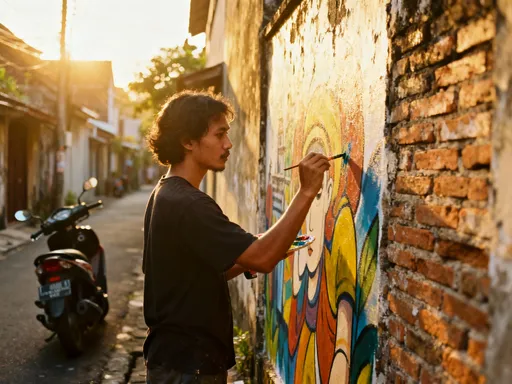
Throughout the year, La Belle de Mai hosts live music performances, from jazz ensembles to acoustic folk sets. Dance workshops, theater rehearsals, and visual art exhibitions take place in the converted factory halls. What sets this venue apart is its accessibility. Events are either free or low-cost, ensuring that culture remains within reach for all. There are no velvet ropes, no dress codes—only an open invitation to participate.
The site also offers community programs, including art classes for children and creative therapy sessions for seniors. These initiatives reinforce its role as more than just a performance space—it is a living part of the neighborhood’s social fabric. Visitors can explore the grounds during daylight hours, even when no events are scheduled. A small café on-site serves light meals and herbal teas, perfect for a quiet pause between discoveries.
Reaching La Belle de Mai is simple. It is served by bus lines 21 and 31, with stops within a five-minute walk. While not a typical tourist destination, its authenticity makes it a rewarding detour for those seeking to understand how Toulouse nurtures both art and everyday joy. The journey there is part of the experience—a slow drift into a different tempo of life.
Hidden Courtyard Cafés in Saint-Anibal District
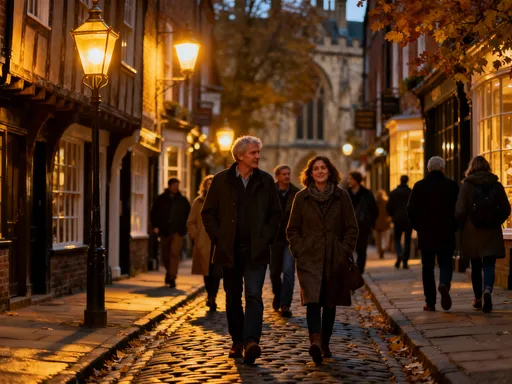
Just beyond the northern edge of Toulouse’s historic core, the Saint-Anibal district unfolds in quiet contrast to the city’s more animated quarters. Here, narrow streets wind between old stone buildings, many of which conceal hidden courtyards accessible through unmarked wooden doors or arched passageways. Within these courtyards, a handful of small, family-run cafés offer some of the city’s most authentic moments of connection.
These spaces are not designed for visibility. There are no flashy signs, no Instagrammable murals. Instead, they rely on word of mouth and the quiet loyalty of regulars. Stepping into one feels like entering a private world. The air is rich with the aroma of freshly ground coffee and warm croissants. The clink of porcelain cups blends with low conversations in French, the occasional laugh rising like a bird in flight. Sunlight filters through trellises covered in ivy, dappling the stone floors in shifting patterns.
One might find a woman reading a novel in the corner, her dog curled at her feet. A man might be sketching in a notebook, pausing to sip from his espresso. A group of friends could be sharing a carafe of house-made lemonade, their hands gesturing as they talk. Time moves differently here—slower, softer, more intentional. These cafés are not places to rush through. They are invitations to linger, to listen, to simply be.
While specific names are intentionally omitted—these spaces thrive on their obscurity—visitors can discover them by wandering with curiosity. Look for narrow alleys with potted plants, for doorways slightly ajar, for the sound of music drifting from within. A polite inquiry in French, even if imperfect, is often met with a warm smile and a gesture toward the entrance. These moments of human connection, small as they may seem, are the essence of authentic travel.
For those seeking respite from the sensory overload of popular sites, these cafés offer a sanctuary. They are not hidden to exclude, but to preserve a way of life that values slowness over speed, presence over performance. In a world that often equates travel with accumulation—photos, stamps, checklists—these spaces remind us that the richest experiences are often the quietest.
Les Berges du Canal: The Laid-Back Pulse of Toulouse
Stretching from the heart of Toulouse to the countryside beyond, the Canal du Midi is more than a waterway—it is a living artery of leisure. Along its banks, known as Les Berges du Canal, locals gather to cycle, walk, and float in kayaks or paddleboards. Unlike the formal gardens and historic squares, this space belongs to the people. It is unpolished, unscripted, and utterly alive.
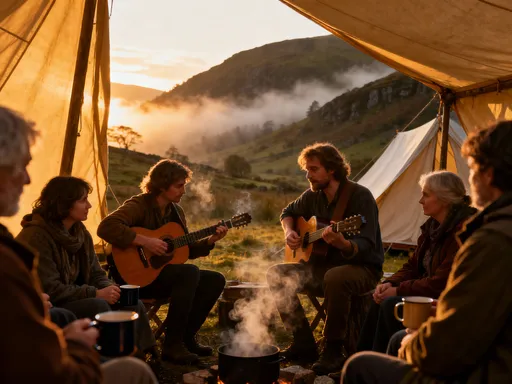
By mid-morning, the towpaths are dotted with activity. Cyclists glide past in pairs, their baskets filled with market finds. Joggers keep pace with the rhythm of the current. Children race ahead, their laughter echoing off the stone bridges. In shaded clearings, groups unfold picnic blankets, unpacking baguettes, cheese, and fruit. Some bring board games, others guitars, turning the banks into impromptu gathering spots.
Golden hour is when the canal truly comes alive. As the sun dips low, casting a warm glow across the water, friends gather with bottles of local wine and glasses clinking in celebration of nothing in particular. Couples stroll hand in hand, pausing to watch the reflections ripple with each passing boat. Kayakers drift silently, their paddles dipping like feathers. The mood is one of collective ease—a shared understanding that this moment, simple as it is, is enough.
For visitors, accessing the canal is easy. Bike rentals are available at several points along the route, including near the Port Saint-Sauveur and the Ponts Jumeaux. Helmets and locks are provided, and routes are well-marked. Safety is generally high, with dedicated paths for cyclists and pedestrians. Swimming is not permitted, but paddleboarding and kayaking are popular in designated areas.
What makes Les Berges du Canal special is its informality. There are no tickets, no schedules, no expectations. People come as they are, dressed in comfortable clothes, carrying nothing more than a towel or a book. This is leisure in its purest form—not curated, not commercialized, but freely given. In a city known for its pink architecture and aerospace legacy, the canal reminds us that Toulouse’s greatest innovation may be its commitment to everyday joy.
Why Off-the-Beaten-Path Leisure Matters
The hidden spaces of Toulouse—its quiet gardens, repurposed factories, tucked-away cafés, and riverside paths—offer more than scenic variety. They provide a deeper kind of nourishment: the chance to connect with a place on its own terms. In an age of hyper-connected travel, where every moment is documented and shared, these spaces invite us to disconnect, to observe, and to simply exist.
Research in environmental psychology suggests that access to green spaces and quiet environments reduces stress and enhances well-being. The same principles apply to travel. When we immerse ourselves in places that reflect daily life rather than curated experiences, we experience lower levels of cognitive fatigue. We become more present, more attuned to our surroundings. This shift is not just emotional—it is physiological. The body slows, the breath deepens, the mind quiets.
Moreover, these spaces reveal cultural authenticity. They show us how people live, rest, and relate to one another. In Toulouse, leisure is not an afterthought—it is woven into the fabric of life. Whether it’s a family picnic in Le Jardin des Plantes or an evening film at La Belle de Mai, the message is clear: time well spent is time shared.
Contrast this with the experience of crowded attractions, where the focus is often on capturing the perfect photo or ticking off a landmark. While these moments have their place, they rarely foster deep connection. The energy of such spaces is transactional—entry fees, timed tickets, fast movement. Hidden leisure spots, by contrast, operate on a different currency: time, attention, and presence.
Seeking out these places requires a shift in mindset. It asks travelers to release the need for control, to embrace uncertainty, and to value stillness as much as sightseeing. But the reward is immeasurable: a sense of belonging, even if only for a few hours. In Toulouse, this is not a luxury—it is a way of life.
Finding Your Own Toulouse
The journey through Toulouse’s hidden corners is not just about discovering a city—it is about rediscovering oneself. It is a reminder that travel is not only about where we go, but how we move through the world. The most meaningful experiences are often the unplanned ones: a conversation with a stranger in a courtyard café, an hour spent watching ducks in a quiet pond, the warmth of shared wine on a canal bank at dusk.
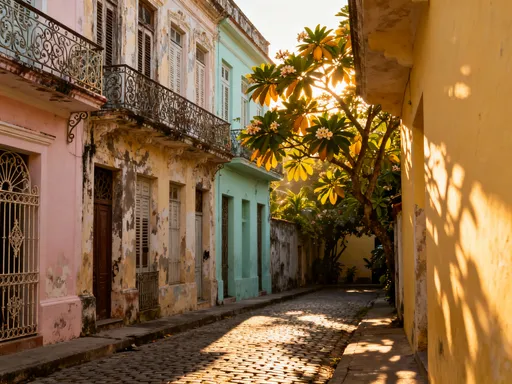
Toulouse’s charm does not lie in its monuments, but in its moments. It is in the way the light falls on a cobblestone path, the sound of a guitar drifting from an open window, the smell of coffee in a hidden garden. These are not attractions—they are invitations. They ask us to slow down, to look closely, to listen deeply.
Every city has its own hidden corners, its own quiet rhythms. The challenge—and the joy—of travel is in finding them. It requires curiosity, patience, and a willingness to wander without a map. But for those who do, the reward is a deeper connection—to the place, to the people, and to the simple, quiet joy of being alive.
So the next time you travel, resist the urge to follow the crowd. Step off the main path. Seek the bench by the river, the garden behind the wall, the café with no sign. Let the city reveal itself in its own time. Because you haven’t truly lived until you’ve seen the world not through a lens, but through an open heart.